Flushing Plumbing & Heating Co. clears drains and repairs sewer lines for houses, co-ops, and small buildings in Flushing and the rest of Queens. A lot of these buildings were piped decades ago. The drain system is often a mix of a cast-iron stack, a house trap at the property line, and a clay or cast-iron connection out to the city sewer. The repair depends on which of those is actually stopped.
What the call usually is
People search for a drain cleaner in Flushing when one fixture misbehaves, and for sewer repair in Queens when the problem has moved to the building line. Those are different jobs. We start by asking which fixtures are affected, which floor they are on, and whether the backup is clean water or sewage. That answer decides whether we open a trap under a sink or go to the house trap and the line outside.
Problems we clear and repair
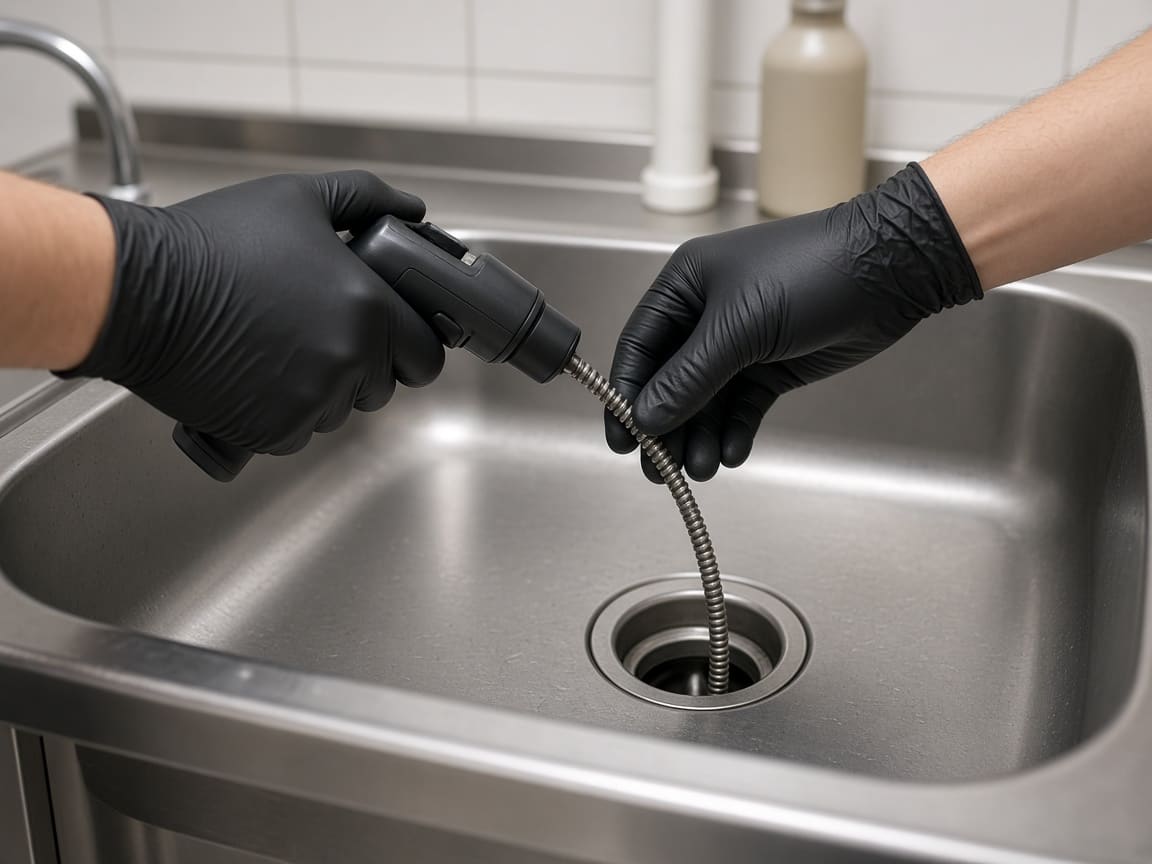
- Kitchen sinks packed with grease, coffee grounds, and rice. A plunger on the sink does not reach a grease plug farther down the branch.
- Bathtub and shower drains stopped with hair and soap. If only that tub is slow, the stoppage is usually close to the fixture.
- A toilet that fills and then rises in the tub. That pattern means the stoppage is downstream of both fixtures, not in the toilet itself.
- A basement floor drain or a first-floor fixture that backs up when an upstairs fixture is used.
- A stack in a walk-up or a co-op that affects one line of apartments and leaves the next line alone.
- Roots at the joints of an old clay connection, or a belly in a line that has settled under a yard.
- A missing or painted-shut cleanout, which changes how we reach the stoppage and how the line should be left for the next time.
Older housing stock, house traps, and shared buildings
Flushing, Murray Hill, Auburndale, and the rest of eastern Queens are full of one- and two-family houses, brick walk-ups, and co-ops. The drain detail that shows up over and over is the house trap: a trap near the property line that was standard in New York City buildings. When it clogs, the lowest fixtures in the building back up first. An upper-floor lavatory may still drain for a while, which makes the problem look smaller than it is.
In a co-op or a condo, the stack and the building drain are often the building's responsibility, and the fixture inside the apartment may be the shareholder's. The proprietary lease is what decides that split. We do not guess it from the sidewalk. If you are the super or the managing agent, say so when you call. We need someone who can open the basement, the cleanout, or the trap.
Cast-iron stacks in prewar buildings corrode from the inside. A snake may punch a hole through scale and buy some time. If the camera shows the wall of the pipe is gone, clearing it again is not the repair. We say that before we sell a second visit.
The city sewer and the owner's connection
New York City holds the property owner responsible for maintaining the building's sewer connection, from the property out to the public sewer, and for repairing or replacing that connection unless the damage was caused by city sewer work. The public main is maintained by the Department of Environmental Protection. Work that makes a new opening into the city sewer, or that relays the connection, needs a DEP permit.
That split matters on a backup. If the stoppage is in the house trap or in the pipe on the property, it is a plumbing repair. If the city main is surcharged and every building on the block is affected, the main is the city's, and we will tell you that instead of opening your yard. We do not invent a city-main failure to avoid a repair, and we do not dig up a connection that the city is already responsible for replacing.
How a drain visit works
- Call 929-499-2387 or send the form. Say which fixtures failed, which floor, and whether sewage is on the floor now.
- If sewage is already out of a drain, stop using water in the building, keep people and pets away from it, and treat it as an emergency plumbing call.
- On site we find a cleanout or the house trap when the building has one. We do not open a finished ceiling as the first move.
- We clear what can be cleared. If the clog returns, or the pipe feels damaged, we camera the line and show you what the picture means.
- You get a free on-site estimate before any repair starts. There is no obligation to go ahead.
Clearing, spot repair, and trenchless work
A clearing is the right job when the pipe is intact and something in it is blocking flow. A repair is the right job when the pipe is cracked, separated, belled out by roots, or collapsed. Trenchless replacement can avoid opening a whole yard when the pipe and the access at both ends allow it. It is not a fit for every Queens lot. Stoops, sidewalks, tight side yards, and lines that have already collapsed still get opened. We recommend the method after the camera, not before.
What changes the cost
We do not publish a flat price, because these jobs are not the same size. The estimate depends on whether one fixture or the building line is stopped, whether we can reach a cleanout, whether a camera is needed, how long the damaged pipe is and what it is made of, and whether the repair stays inside or continues under a yard, a sidewalk, or a street. A connection that has to be relayed also includes the DEP permit and the restoration of whatever we open. After-hours work, when sewage is already out of the drain, is a different visit from a slow sink you can schedule. You hear that split before we start.
Sewage on the floor is a phone call
Do not keep running water to "see if it goes down." Call 929-499-2387. If the backup is only one slow bathroom sink and it can wait, use the quote form and we will schedule it.
Questions
One sink is slow. Is that a sewer problem?
Usually not. A single slow bathroom sink is often hair in the trap. A single kitchen sink is often grease in the branch line. When several fixtures are slow, or a lower-floor drain backs up while an upper one is used, the stoppage is farther down the building drain or at the house trap.
Why does the basement floor drain back up in an older Queens house?
The lowest opening is where a blocked building drain shows itself. In many older Queens houses that opening is a floor drain, and the blockage is in the house trap near the property line or in the clay connection out to the city sewer. Stop using water and call 929-499-2387.
Do you camera the line before you recommend a repair?
When a clog comes back, or when we think the pipe itself is damaged, yes. A camera shows whether the line needs another clearing or a repair, and where that repair has to be. We do not open a yard or a sidewalk on a guess.
Is trenchless sewer repair always an option?
No. Trenchless replacement is an option when the pipe is a candidate and the run can be reached from the ends. A collapsed pipe, a line trapped under a stoop, or a spot we cannot work around is opened and repaired. We say which one applies after we see the pipe.
Who is responsible for the pipe to the city sewer?
New York City holds the property owner responsible for maintaining the building's connection out to the public sewer, and for repairing it unless city sewer work caused the damage. A new or altered connection needs a permit from the Department of Environmental Protection. The public main is the city's.
A whole line of apartments is backing up. Who should call?
In a co-op or a rental building, a stack or a main that serves more than one apartment is usually a building problem. The super or the managing agent is the right person to call us, because we need access to a cleanout, the basement, or the house trap. Tell us that when you phone.