Flushing Plumbing & Heating Co. does gas plumbing for houses and multifamily buildings in Flushing and all of Queens. The company name includes heating because the same visit often covers the boiler, the water heater, and the pipes that feed them. Gas work is not a side task we hand to whoever is nearby. In New York City it is licensed-master-plumber work.
If you smell gas, leave
Do not hunt for the leak. Do not use switches or a phone until you are outside. Call 911 if anyone may be in danger, call your gas utility, and call 929-499-2387. A gas odor is an emergency, including in the middle of the night.
Work we do on the building's gas piping
- Leaking fittings, damaged black-iron runs, and valves that will not close.
- Connectors and valves at stoves, dryers, water heaters, and boilers. A connector that is kinked, buried in a wall, or used as permanent piping gets replaced the right way.
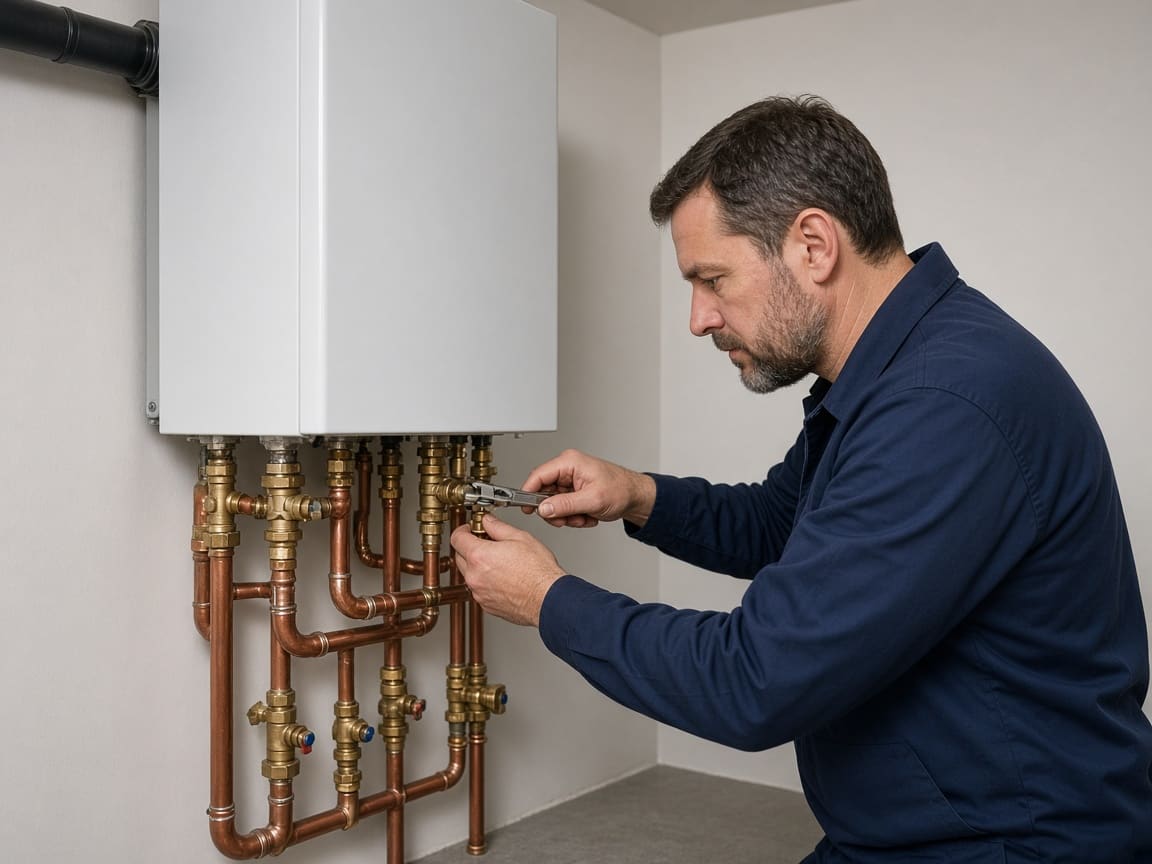
- Piping changes that a new heater or a boiler repair actually requires, including a line that is too small for the appliance.
- House-side piping at the meter. The utility owns the meter. We do not install or remove the utility's meter.
- Tests after a line is opened or altered, before that line is put back in service.
- Local Law 152 gas piping inspections for buildings the law covers. One- and two-family homes are outside that inspection cycle. The inspection page says who is in it and how the filing works now.
Older Queens buildings
A Flushing or Bayside house often has a boiler in a low basement, black-iron piping that has been added onto for decades, and a water heater or a tankless coil on the same gas supply. A walk-up or a co-op has a meter room, risers, and valves that the super can reach and a shareholder usually cannot. We need that access. Tell us if you are the owner, the shareholder, or the managing agent so we ask the right person to open the right door.
Flexible connectors belong at the appliance, in the open, where they can be inspected. They are not a substitute for pipe through a wall or a floor. When we find one used that way, we say so and we price the correction before we do it. We do not bury a new connector to make a finish look tidy.
Permits, tests, and who files them
When gas piping is altered, New York City expects a permit filed by a master plumber licensed by the Department of Buildings, and a test of the piping before it goes back into service. Not every tightened fitting is that kind of job. Adding, relocating, or replacing a run of piping usually is. We separate those two before we open the line, and the estimate says whether a filing is included. We do not publish a license number here.
If the utility has red-tagged an appliance or shut the gas off, restoration on their side of the meter is their process. We repair the building piping they are waiting on, test it, and coordinate the filing. We do not pretend we can turn the utility's valve back on ourselves.
How a gas line visit works
- If there is an odor, you leave and call from outside. If there is no odor, call 929-499-2387 or send the form and describe the appliance and the building.
- We ask whether the building is a house, a co-op, or another multifamily building, because access and the Local Law 152 question are different.
- On site we find the piping that serves the appliance, the shutoff, and the condition of the connector and the vent.
- You get a free on-site estimate before repair work starts. If a permit and a pressure test are required, they are part of that conversation.
- After an opened line is repaired, we test it before it is put back in service.
What changes the cost
Gas jobs are priced from the site, not from a menu. The differences that matter are how much piping has to be replaced, whether the line is exposed or buried in a finished wall, whether the meter room and the appliance are far apart, whether a permit and a test are required, and whether other apartments or the boiler have to be shut down while we work. A single connector at a stove is not the same visit as a basement run feeding a boiler and a heater. An emergency call, when there is an active odor, is not the same visit as a scheduled repair. We describe that before we start. There are no dollar figures on this page because those differences are the price.
Questions
What if I smell gas?
Leave the building. Do not flip switches, light a flame, or start a car in the garage. From outside, call 911 if anyone may be in danger, call your gas utility, and call us at 929-499-2387. Do not look for the leak with a flame.
Who is allowed to work on gas piping in New York City?
Gas piping work that needs a permit is filed by a master plumber licensed by the NYC Department of Buildings. The people on the job work under that license. We do not publish a license number on this site.
Do you install the utility's gas meter?
No. The gas utility owns the meter. We work on the building's piping: the house side of the system, appliance connectors, and the piping that feeds a boiler, a water heater, a stove, or a dryer. If the utility has to shut gas off or restore it, that part is theirs.
Does my building need a Local Law 152 inspection?
Many buildings do, on a four-year cycle set by community district. One- and two-family homes and other occupancy group R-3 buildings are outside the law. The inspection page explains the current DOB NOW filing and tells you to confirm your community district instead of guessing a due year.
A stove was replaced and the gas connector looks wrong. Is that a plumbing call?
Yes. Appliance connectors, valves, and the piping they attach to are gas plumbing. If the connector is damaged, kinked, or run through a wall, we correct it. If the job changes the piping in a way that needs a permit and a pressure test, we say so before we open the line.
Will you test the line after the repair?
When a gas line is opened or altered, it is tested before it is put back in service. We do not leave an opened gas line on a promise to come back later for the test.